A HISTORY OF THE VILLAGE
In the past Wrentham has been called Wrancham, Wrantham, Wretham and Wrettingham. It was mentioned in the Domesday Book. In 1086 the whole of the lands of Wrentham were held by William de Warrens of Varennes, who was one of William the Conqueror's great knights. Having fought at the battle of Hastings and having been involved in the invasion plans he was given 300 manors, half in Suffolk and Norfolk. These included Wrentham, Benacre and Henstead. Later he was created Earl of Surrey, built a castle in Holt, Norfolk, founded Lewes Priory in Sussex and lived mostly at the castle at Lewes. He died in battle in 1089. At this time, the Parish was divided into 6 manors which consisted of 1760 acres of arable land on which the parish was taxed and 604 acres being composed of wood, common and waste land. A parish was like a miniature kingdom. There was an approximate total population of 540. The total population of England was 2 million so Wrentham was considered to be a large settlement. This is shown by the fact that it had two churches, one on the current site and the other the site of which is unknown.
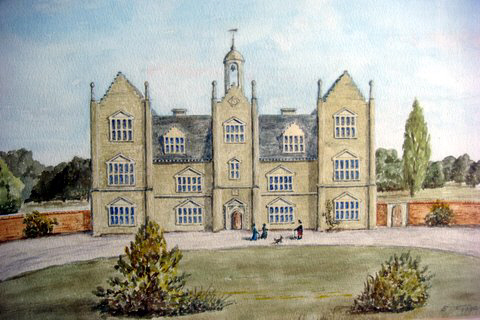
In the centuries which followed the Norman Conquest, the manors were substantially developed, particularly Perpounds, which was South of Wrentham Hall and Poinings, which was North Hall.
In 1307 the tenant in chief of the Manors of Wrentham, known as South Hall and North Hall were the Valences family (Earls of Peinbroke) and under them the lands were held by the families of Pierrepoint and Poynings respectively. These families and their descendants continued to hold the manors until, just prior to the reign of Queen Elizabeth I(1553-1603), it passed to the Brewster family.