History

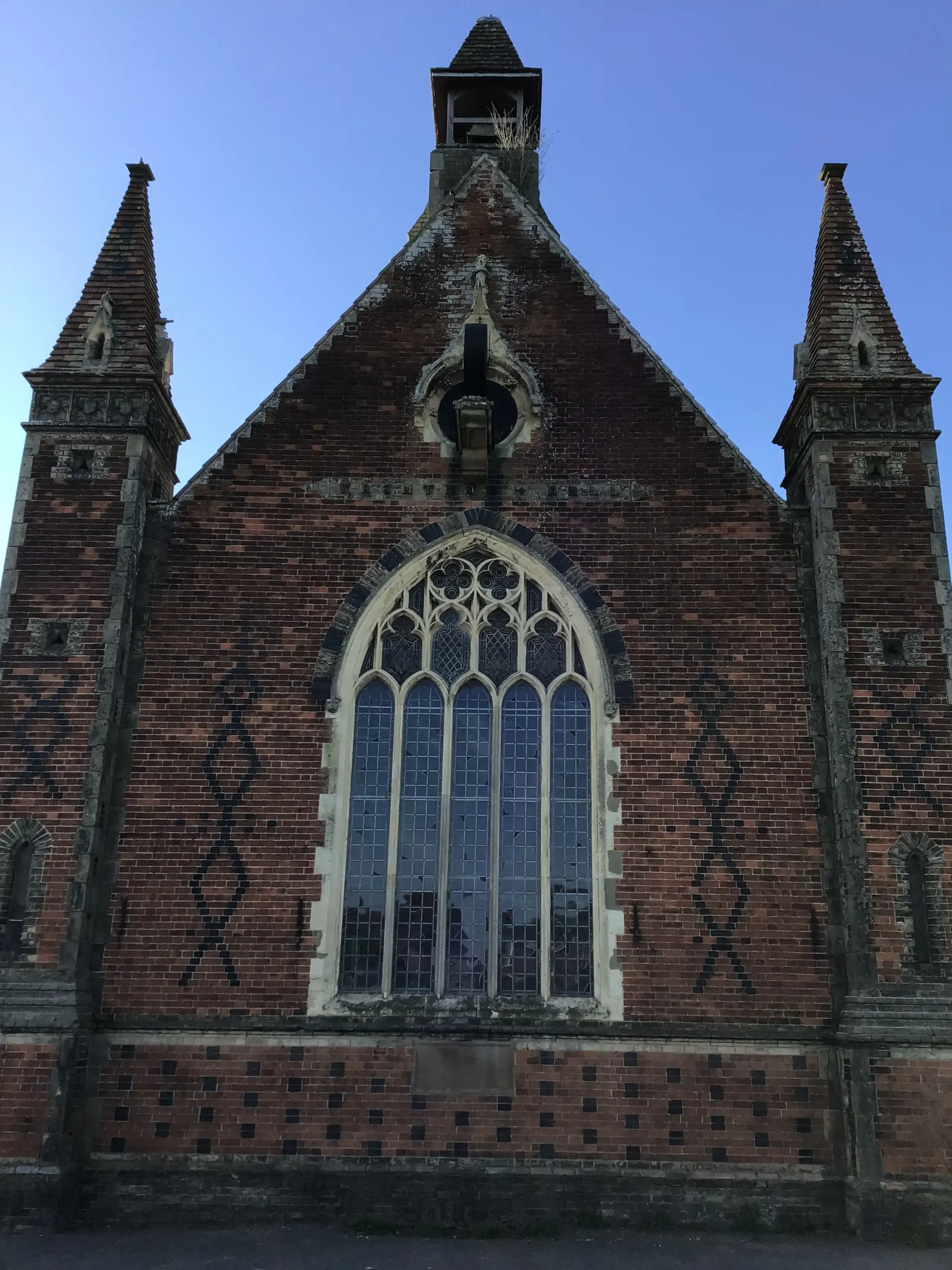
The Old Town Hall, Wrentham

A HISTORY OF THE VILLAGE

In the past Wrentham has been called Wrancham, Wrantham, Wretham and Wrettingham. It was mentioned in the Domesday Book. In 1086 the whole of the lands of Wrentham were held by William de Warrens of Varennes, who was one of William the Conqueror's great knights. Having fought at the battle of Hastings and having been involved in the invasion plans he was given 300 manors, half in Suffolk and Norfolk. These included Wrentham, Benacre and Henstead. Later he was created Earl of Surrey, built a castle in Holt, Norfolk, founded Lewes Priory in Sussex and lived mostly at the castle at Lewes. He died in battle in 1089. At this time, the Parish was divided into 6 manors which consisted of 1760 acres of arable land on which the parish was taxed and 604 acres being composed of wood, common and waste land. A parish was like a miniature kingdom. There was an approximate total population of 540. The total population of England was 2 million so Wrentham was considered to be a large settlement. This is shown by the fact that it had two churches, one on the current site and the other the site of which is unknown.

In the centuries which followed the Norman Conquest, the manors were substantially developed, particularly Perpounds, which was South of Wrentham Hall and Poinings, which was North Hall.

In 1307 the tenant in chief of the Manors of Wrentham, known as South Hall and North Hall were the Valences family (Earls of Peinbroke) and under them the lands were held by the families of Pierrepoint and Poynings respectively. These families and their descendants continued to hold the manors until, just prior to the reign of Queen Elizabeth I(1553-1603), it passed to the Brewster family.
The Old Town Hall, Wrentham

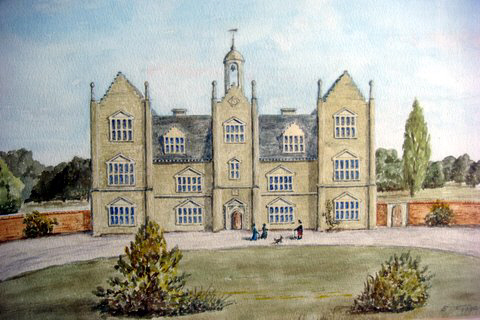
Humphrey Brewster was the first lord of the Manor to live in Wrentham and in 1550 he built a fine house, known as Wrentham Hall, to the north-east of the church on the farm now known as Blackmoor Farm. This was a typical specimen of a large manor house of the Elizabethan period. The Brewster family were first located in Suffolk as early as the reign of Edward III (1327-1377). They acquired property which their descendants retained for 400 years, which extended into 20 parishes - Wrentham, Benacre, Henstead, Rushmere, Sotterley, Wangford, Uggleshall, Gisleham, North Hales (Covehithe), Reydon, South Cove, Easton, Wenhaston, Frostenden, Ringsfield, Great and Little Redisham in Suffolk. and also lands in Norfolk. In St. Nicholas church, Humphrey Brewster is depicted in military costume of the period in the brass on the wall of the sanctuary near his burial place. Other members of the family are buried below the floor of the sanctuary.

Through the centuries the village of Wrentham lay around the ancient church of St. Nicholas and travellers from London to Yarmouth passing through Frostenden, came along Guildhall Lane, past Wrentham Church, over the little bridge which spans the 'Run' and on through the parishes of Rushmere, Carlton and Oulton to Yarmouth. In 1786 it was decided to make a new road through Benacre, over the recently drained Kessingland Marshes, to the fishing village of Lowestoft and on to Yarmouth. The Ipswich Journal of 27th May 1786 records that during the construction of the 'New Turnpike Road', one of the workmen found a stone bottle containing 920 silver coins at a spot known to the present day as 'Money Tree Clump' near the site of Middle Lodge, (this has since been demolished), on the A12. A regular coach service was started and the Spread Eagle (now accommodation) was a Coaching Inn. A new village grew rapidly around the 'Five Cross Ways' and by 1821 the population of Wrentham had grown to 995.

The last Brewster to live at Wrentham Hall died in 1797 and in 1810 the lands and Hall were purchased by Sir Thomas Gooch, 4th Bt. The Hall was then demolished and its contents sold at auction.

The Primitive Methodist Chapel, built in 1841 and enlarged in 1901-2, is now closed (and has been converted into a private house).

The Reading Room, in the High Street, Wrentham was built in 1858 and had a library of 1000 books. A small coffee house was built beside it. The whole building was sold into private hands in 1968. It became an antique and bric-a-brac shop and is now holiday accommodation with a small shop in what was the coffee house.

The article on the right refers to the building of the old Town Hall in Wrentham. C 1860 the Rev. Stephen Clissold saw a need for a place of worship (on Sabbath evenings) and for other uses by the community during the rest of the week, in the centre of the village. Miss S. O. Lehman had left £225 for the ‘welfare of the inhabitants of Wrentham’. With this and a considerable amount of his own money he had the Town Hall built. The inhabitants of the village enjoyed the use of this building, (with the exception of the time during the two world wars), until the cost of repair was beyond the affordability of the village and it was sold into private hands at auction, for £24,000, on 25th. March 1985. During the two world wars it was commandeered for billeting soldiers.

The following article was in the ‘Mercury’ September 8th, 1860 describing the generous action of Steven Clissold

For the information of our readers who may not have heard the antecedent circumstances in connection with this event, we may state, that for some time past the Rev. E. M. Clis-sold, Rector of Wrentham—and son of the generous donor—has been in the habit of con-ducting a religious service in the village Reading-room, on Sabbath evenings, but that building being found attended with so many inconveniences, and with such scanty accom-modation, a more spacious room was much to be desired. The Rev. S. Clissold no sooner discovered the wants of his son's parishioners than he at once proposed a remedy, in the raising of an entirely new structure, to be used on Sabbath evenings for religious wor­ship, and on other days for any other purpose that can possibly promote the well-being of the villagers. On Wednesday the 25th of April last, the foundation stone was laid by the highly esteemed wife of the Rector, amid cir­cumstances of general rejoicing, and on Wednesday last the building was formally opened, and is now ready to be devoted to the purposes for which it has been constructed.

Not the least pleasing feature in connection with this event is the genuine Catholic spirit of the Rev. S. Clissold, which imparts far greater grandeur to the scheme, than art or embellishment could ever afford. He declares his willingness to recognize as brethren all denominations of Christians, resident in the village, to whom the Hall is as much available for social or other purposes—free of charge— as those belonging to the Church with which he himself stands identified, and this is indeed a bright and cheering fact. There has, for

years past—especially in rural parishes—been too much bigotry and strife amongst professedly religious men, ever to suffer Christianity to flourish, and the sooner it is ended the better will it be for the cause of truth. To Wren­tham then we point the attention of all who fancy themselves holier than their brethren, for there we hope and believe it may with truth be said " See how these Christians love one another !"